
How to Choose the Right Masking Tape for Manufacturing, Installation, and Finishing
The wrong tape costs more than the roll itself. Paint bleeds under the edge of a crepe tape on a finished aluminium panel. Adhesive residue bakes onto a powder-coated frame in a spray booth. A roll that tears mid-application slows a production line and forces a rework that nobody budgeted for. These are common occurrences in many operations, and they are often caused by specifying the incorrect grade or adhesive for the application.
At Dewpoint Industries, we supply high-grade masking tape and Washi tape surface protection products to manufacturers, processors, builders, and installation businesses across South Africa. We see the wrong-tape mistake often enough to know that it is largely avoidable with a working understanding of grade, adhesive, temperature tolerance, UV exposure, and width. This guide covers all of that, along with application and removal techniques, and what to check before placing a bulk order.


Wider is not always better[cite: 1]. Buying a single width for every application across a facility or job site is inefficient and results in either wasted tape, double-taping to achieve coverage, or poor masking precision on narrow profiles.
- Precision & Detail Widths (18mm and 24mm): Ideal for narrow trim, glazing bars, small mouldings, and fine-line detailing.
- Medium & Wide Formats (36mm, 48mm, and 72mm): 36mm and 48mm widths cover floor edges, broad architraves, picture rails, and worktops. For expansive surface coverage, 72mm rolls eliminate double-taping, cutting labour time in half and eliminating potential bleed gaps at overlap seams.
- Standard Lengths: Dewpoint Industries supplies masking rolls in full commercial 40m lengths.
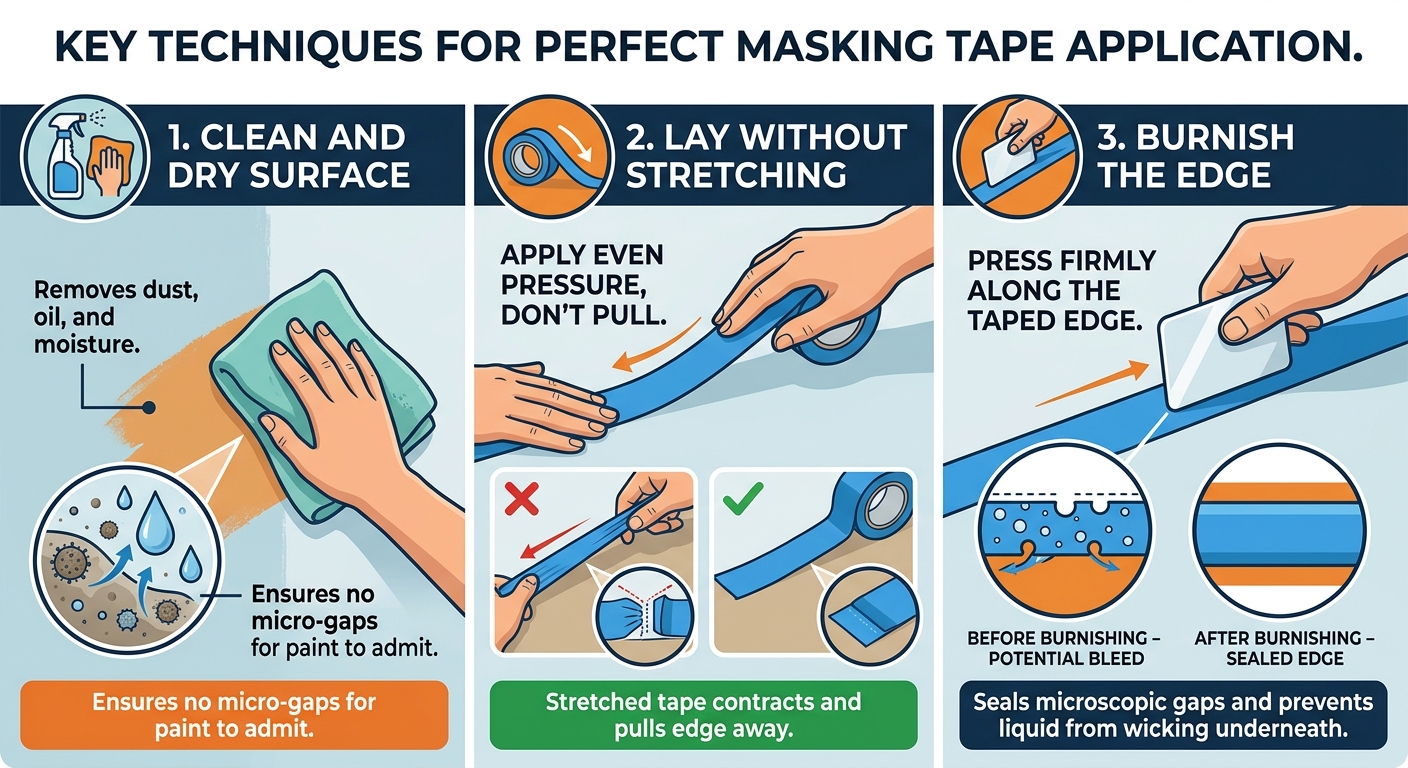
Technique matters as much as product selection. The right tape applied incorrectly will still bleed.
- Clean and Dry: Ensure the surface is completely clear of dust, oil, or moisture, which creates micro-gaps that admit paint. Use a clean cloth or alcohol-based cleaner if necessary.
- Lay Without Stretching: Stretched tape contracts as it settles, pulling the edge away from the surface.
- Burnish the Edge: After applying even pressure, run a plastic card or putty knife firmly along the taped edge. This seals microscopic gaps that allow paint or liquid moisture to wick underneath.
Partner with Dewpoint Industries
Dewpoint Industries supplies a complete range of high-grade masking tape and surface protection products across South Africa with nationwide delivery