
Protecting Design Integrity: Floor Protection FAQ
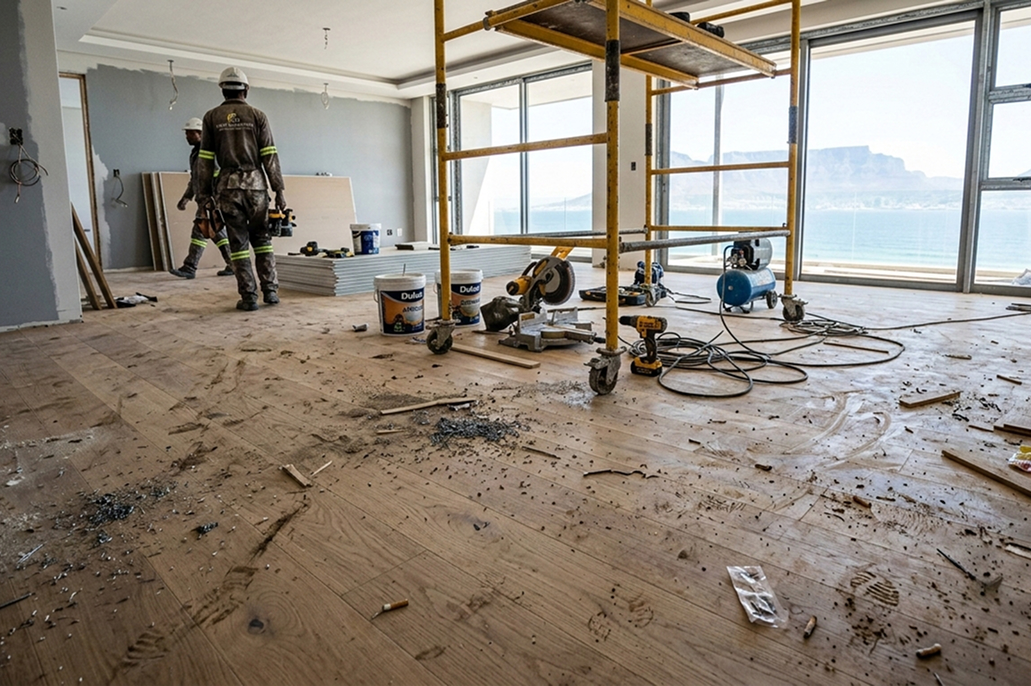
Why do newly installed floors get damaged so often during construction?
A: Builders and foremen are excellent at construction, but they usually don’t understand the technical behavior of delicate floor finishes. Currently, most floor protection decisions happen after the floor is installed.
Typically, the process looks like this:
- The floor gets installed.
- Heavy construction traffic continues.
- The foreman says, “Put something down so we don’t damage the floor.”
- Someone grabs whatever material happens to be available.
Who is actually making the floor protection decisions on-site?
In most cases, the decision is made by a site foreman under intense time pressure. Instead of looking at the technical behavior of the floor finish, they choose protection based on:
- What is the cheapest option
- What is currently available on-site
- What worked on their last job
Why is there a disconnect between design specification and site reality?
Why is there a disconnect between design specification and site reality?
Why can't we just use regular plastic sheeting to protect floors?
Plastic is vapour-impermeable, meaning moisture cannot escape. Many floor finishes are technically sensitive and require controlled vapour transmission during curing or acclimating.
If you trap moisture under plastic, condensation forms and causes the floors to “sweat.” This leads to:
- Timber cupping or warping
- Adhesive failure
- Severe discolouration and staining
What is UV "ghosting" and how does it happen?
During construction, parts of a floor are often covered by materials or tools while other sections remain exposed to sunlight. This uneven UV exposure causes different rates of fading or curing. When the temporary protection is removed, the floor can show permanent shadow patterns, colour variations, and “ghosting” marks. This is especially common with timber, vinyl, and certain sealed concrete surfaces.
Summary of Technical Sensitivities:
Floors aren’t just sensitive to scratches. They are deeply affected by moisture transmission, curing times, adhesive interactions, UV exposure, and using the incorrect tape.
Why does it matter if floor protection is handled poorly?
When floors are damaged, it creates a domino effect of issues before handover:
- Expensive remedial and repair work
- Severe project delays
- Contractor disputes and insurance claims
- Compromised, sub-par finishes at final handover
- Ultimately, everyone is left asking the same frustrating question: “Why wasn’t the floor protected properly?”
What is the benefit of specifying floor protection during the design stage?
Accurate Pricing: Contractors can price the correct materials properly from the start.
Integration: It becomes an official part of the construction program.
Technical Accuracy: The correct, vapour-permeable, and UV-consistent materials are used.
Accountability: Responsibility and expectations are clearly defined, completely eliminating last-minute guesswork on-site.